- Upgrade your defenses, not your anxiety. Let’s Talk! Contact Us


Neanderthal Fingerprint Discovery: Oldest Human Print Found
In a groundbreaking archaeological discovery with significant implications for forensic investigation and fingerprint forensic science, researchers have identified what is believed to be the oldest complete human fingerprint ever recorded — dating back approximately 43,000 years. This remarkable find was made on a red-ochre-stained stone unearthed at the San Lázaro rock shelter in central Spain, near Segovia, and has now been confirmed through advanced scientific and forensic analysis as the earliest known human fingerprint on the planet.
The stone, a roughly 20-centimeter granite pebble, displays a distinct fingerprint impression preserved in pigment, suggesting deliberate contact with the surface. Multispectral imaging and dermatoglyphic analysis - techniques also used in modern fingerprint identification and forensic science — revealed clear ridge patterns, bifurcations, and convergence points consistent with a human finger impression. Lead investigators involved specialists from Spain’s National Police forensic team, who confirmed the mark was made by a human, likely an adult Neanderthal male.
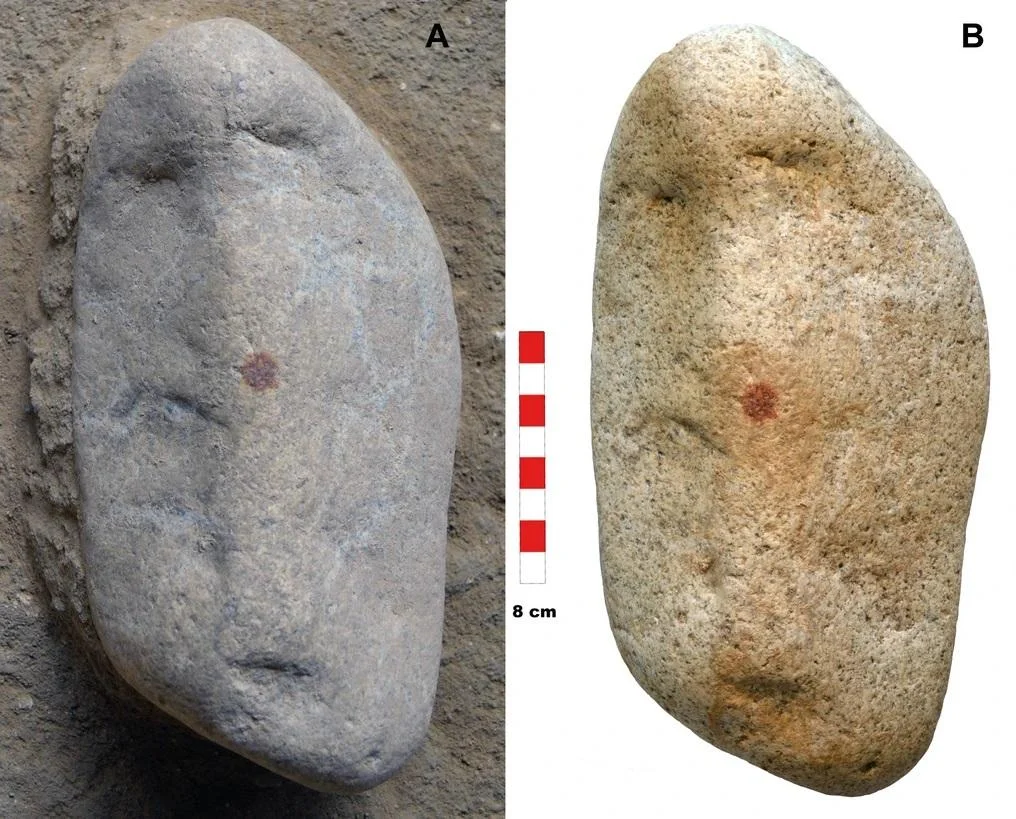
What makes this find particularly compelling is not just its age, but what it suggests about Neanderthal cognitive ability and symbolic behavior. The placement of the ochre dot amidst natural indentations on the pebble gives the impression of a simplified face — hinting at potential early artistic expression or intentional symbolic use of objects by Neanderthals. Prior to this, fingerprint evidence from prehistoric contexts was extremely rare and typically incomplete, making this the most complete prehistoric dermatoglyph ever documented.
From a forensic perspective, the use of cutting-edge imaging and analytical methods to identify such ancient fingerprints demonstrates how modern forensic tools can extend beyond contemporary crime scene analysis to enhance our understanding of early human behavior and identity. The discovery also lends weight to the ongoing reassessment of Neanderthals’ intellectual and cultural complexity, challenging long-held assumptions that symbolic thought was unique to modern humans.
This discovery not only adds a remarkable chapter to the history of human evolution but also reinforces the importance of interdisciplinary collaboration — combining archaeology, geology, and forensic expertise - to uncover and interpret evidence from deep prehistoric time.

Providing effective, efficient, cutting edge, Next Gen Cyber Security and Forensics Services to various sectors of clientele across the globe.

Talk to an Expert
We’ll respond within 24 hours
Thank You!
Your enquiry has been submitted successfully. Our team will contact you within 24 hours.