- Upgrade your defenses, not your anxiety. Let’s Talk! Contact Us

Latest Forensic News

Neanderthal Fingerprint Discovery: Oldest Human Print Found
In a groundbreaking archaeological discovery with significant implications for forensic investigation and fingerprint forensic science, researchers have identified what is believed to be the oldest complete human fingerprint ever recorded — dating back approximately 43,000 years. This remarkable find was made on a red-ochre-stained stone unearthed at the San Lázaro rock shelter in central Spain, near Segovia, and has now been confirmed through advanced scientific and forensic analysis as the earliest known human fingerprint on the planet.The stone, a roughly 20-centimeter granite pebble, displays a distinct fingerprint impression preserved in pigment, suggesting deliberate contact with the surface. Multispectral imaging and dermatoglyphic analysis - techniques also used in modern fingerprint identification and forensic science — revealed clear ridge patterns, bifurcations, and convergence points consistent with a human finger impression. Lead investigators involved specialists from Spain’s National Police forensic team, who confirmed the mark was made by a human, likely an adult Neanderthal male. What makes this find particularly compelling is not just its age, but what it suggests about Neanderthal cognitive ability and symbolic behavior. The placement of the ochre dot amidst natural indentations on the pebble gives the impression of a simplified face — hinting at potential early artistic expression or intentional symbolic use of objects by Neanderthals. Prior to this, fingerprint evidence from prehistoric contexts was extremely rare and typically incomplete, making this the most complete prehistoric dermatoglyph ever documented. From a forensic perspective, the use of cutting-edge imaging and analytical methods to identify such ancient fingerprints demonstrates how modern forensic tools can extend beyond contemporary crime scene analysis to enhance our understanding of early human behavior and identity. The discovery also lends weight to the ongoing reassessment of Neanderthals’ intellectual and cultural complexity, challenging long-held assumptions that symbolic thought was unique to modern humans. This discovery not only adds a remarkable chapter to the history of human evolution but also reinforces the importance of interdisciplinary collaboration — combining archaeology, geology, and forensic expertise - to uncover and interpret evidence from deep prehistoric time.
More details
Private Forensic Labs: Analyzing Government Case Samples
The Indian government now allows private forensic labs to help analyze evidence from official cases. Learn how this move can speed up investigations and reduce backlogs in the justice system. In a progressive step toward improving the speed and efficiency of forensic investigations, the Indian government has opened the door for private forensic laboratories to assist in analyzing evidence originally assigned to government labs.This decision, announced by Union Home Minister of India, marks a significant shift in India’s approach to forensic science and justice delivery. Until now, government labs were solely responsible for handling forensic samples in legal cases — often resulting in long queues, delayed reports, and strained resources.What Has Changed?The change allows accredited private forensic labs to step in and assist with the analysis of case samples, such as DNA, toxicology, digital evidence, and more. These samples, once restricted to state-run forensic science laboratories (FSLs), can now legally be processed by private institutions that meet strict accreditation standards.This move is not about replacing government labs — it’s about sharing the load. With private labs now allowed to help, investigations can move faster, courts can receive evidence reports sooner, and backlogs can finally start to shrink.Why This Move Was NeededLet’s be honest — India’s forensic system has been under pressure for a long time. Many government labs face staff shortages, outdated equipment, and a never-ending backlog of cases. The result? Critical forensic reports that are supposed to aid police investigations and court decisions often arrive too late to make a difference.By involving the private sector, the government hopes to speed up the justice process while maintaining quality and credibility.Not Just Any Lab Can Join InBefore anyone worries about misuse or loss of credibility — there’s a safeguard in place.Only private forensic laboratories that are NABL-accredited and comply with all legal and ethical standards will be eligible. The goal is to ensure that the integrity of the evidence remains intact while also speeding up the timeline.So, while the door is open, it’s only for those who can prove they’re ready and qualified.A Boost for Victims, Investigators & the JudiciaryFor law enforcement, it means faster forensic support for investigations.For courts, it ensures timely submission of scientific evidence.For victims and the accused, it can reduce delays and bring clarity sooner.For the justice system overall, it means less pending work and more timely verdicts.In essence, it’s a win-win for everyone involved in the justice delivery process.A Stronger Public-Private CollaborationThis policy shift also signals something bigger — a growing trust between public institutions and private expertise. For years, private forensic labs in India have operated on the sidelines, offering services to corporate clients, individuals, and legal professionals.Now, they can play a direct role in nation-building by contributing to official criminal cases.What This Means for Labs Like OursAt Proaxis Solutions, we welcome this move with open arms. With our expertise in: Digital forensics, multimedia forensics, signature forensics, audio-video authentication, document forensics, fingerprint forensics etc.…we’re ready to support government agencies, legal teams, and investigative bodies with accurate, court-admissible, and confidential forensic services.Final ThoughtsThis is more than a policy update — it’s a step toward a faster, more efficient, and more inclusive justice system in India. The inclusion of private labs shows a willingness to evolve, modernize, and prioritize outcomes over bureaucracy.As a private forensic lab, we’re proud to be part of this change and committed to serving with integrity and precision.
More details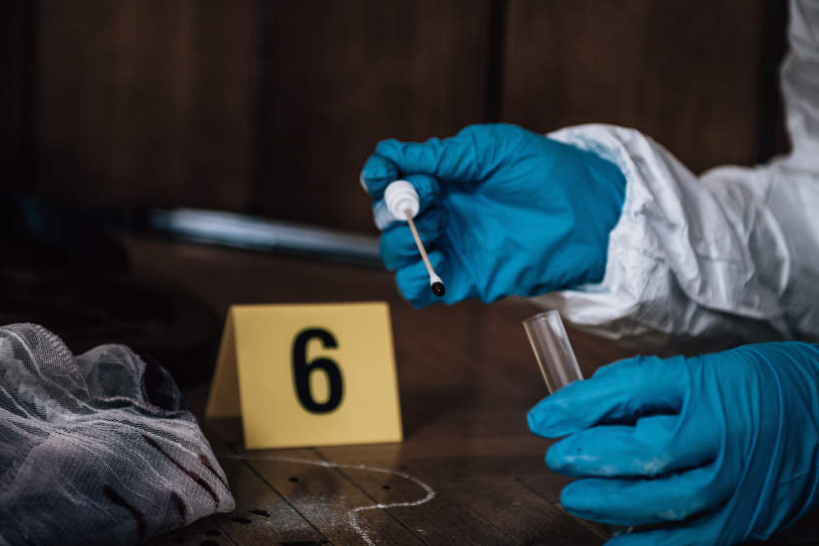
Blockchain in Forensics: Delhi Police Chain of Custody
The e-forensic application of the Delhi Forensic Science Laboratory (DFSL) and the Delhi Police will now use blockchain technology to create an unchangeable and transparent record of the chain of custody for evidence, making DFSL the first institution of its kind in the country to use this technology, lieutenant governor VK Saxena announced. The Delhi Police has already trained at least 1,500 personnel to operate this new technology, and more than 3,000 forensic samples are being processed and analysed using it, according to officers' familiar with the matter. Blockchain technology is a system of storing and transferring information in a chain of blocks, with each block containing data, such as, in this case, forensic records, case records, images or logs. All the information is encrypted with cryptography, which prevents fraud and hacking. The data is decentralised because it is not stored in one place but on many computers, making it harder to tamper with the information. Due to these reasons, blockchain technology is considered secure and transparent.The criminal justice system has several steps, the first of which is a crime being reported. The next step is police registering a case and visiting the crime scene. Then, the forensic team visits and collects evidence and samples from the scene and deposits them. The next step is assigning a QR code to the sample. After that, a messenger takes custody of the evidence and brings it to a lab. Next, a scientist takes charge of the evidence and prepares the forensic report. The report is then submitted to the police.Source:
More details
Providing effective, efficient, cutting edge, Next Gen Cyber Security and Forensics Services to various sectors of clientele across the globe.
Talk to an Expert
We’ll respond within 24 hours
Thank You!
Your enquiry has been submitted successfully. Our team will contact you within 24 hours.